A clean grease trap does not prove that the pipe beyond it is clear. Deposits may have formed before the latest service, some connected outlets may bypass the trap, or the equipment may need a separate performance assessment. The location and timing of the recurring blockage help distinguish those possibilities.
Find out which pipe was actually attended
Review the latest service report. Does it describe emptying and cleaning the trap, work on the outlet pipe, or both? These are different tasks. A record of removed trap contents should not be read as confirmation that the downstream drain was cleaned.
Identify the affected fixtures and the known route from them to the trap. Kitchens often change as equipment is added or preparation areas move. The current drainage arrangement may differ from an old drawing or an assumption based on where the trap is located.
For restaurant drain cleaning, include the trap service record and the outlets that drain slowly or back up. This helps define whether the immediate task concerns retained pipe deposits, the trap itself or an uncertain connection.
Distinguish old deposits from continuing input
If a downstream restriction existed before the trap was emptied, cleaning the trap alone would not establish that the restriction had gone. The previous blockage location and any recorded camera findings are useful evidence when deciding where to investigate.
If drainage initially improved and then deteriorated, record the interval and the kitchen activities taking place. That history may point to questions about continuing inputs, but it does not prove a particular kitchen practice or equipment fault caused the problem.
Ask the contractor to describe the material found and its position. “Grease problem” is too broad to distinguish deposits immediately at the outlet from a restriction farther along a shared drain.
Check the input practices alongside maintenance
The Food Standards Agency’s food-business guidance recommends keeping food waste out of sinks, dry-wiping plates and pans, and maintaining grease-management equipment. These actions address what enters the drainage system as well as what the trap retains.
For a manager, the practical check is whether the agreed kitchen routine is workable during busy periods. Consider where staff scrape plates, where collected food waste goes and whether the relevant equipment is available at each washing point.
Keep that review separate from blaming an individual member of staff. The confirmed drainage findings and the actual kitchen layout provide a better basis for deciding whether arrangements need to change.
Ask a performance question when the pattern persists
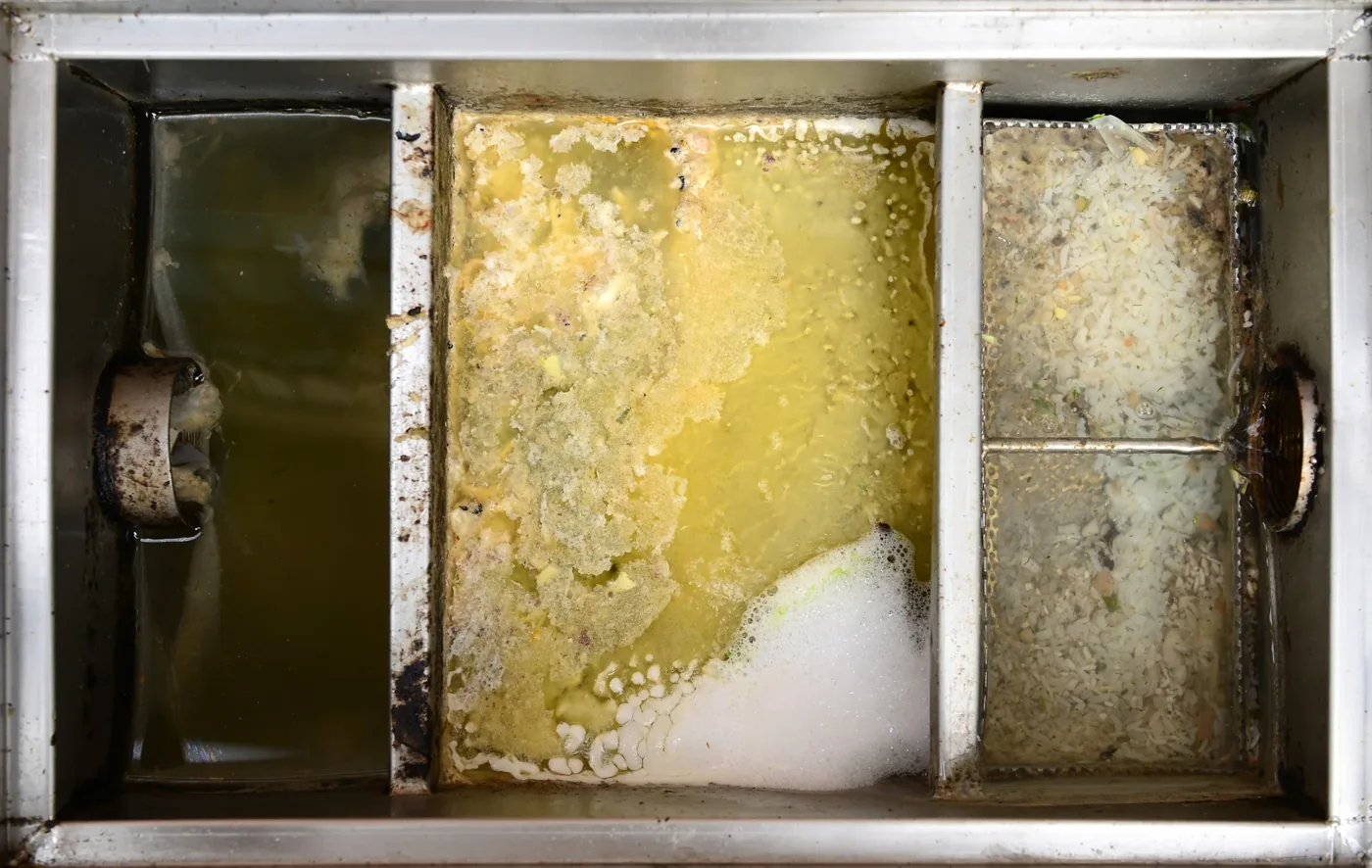
A trap that looks clean after servicing may still need its installation and operating conditions assessed. Ask whether all intended flows reach it and whether the maintenance report identifies damaged, missing or inaccessible components. Avoid assuming that a shorter cleaning interval answers every problem.
If specialist assessment is proposed, define what it is expected to establish. It might concern the connected outlets, the unit’s suitability for the actual kitchen use or an unresolved finding from the service visit.
Keep the resulting actions distinct: pipe cleaning removes identified deposits; trap maintenance attends the equipment; input changes address material entering the drains. Record which work was completed and what was checked afterwards. That makes the next decision depend on evidence rather than the fact that the trap was recently emptied.