

Interceptor cleaning removes the oil and sediment held within the drainage separator before accumulation affects its operation. The separator’s internal arrangement determines how its contents are removed and how the unit is returned to use. We clean the agreed compartments and identify any component that needs further servicing.
Interceptor Cleaning
Interceptor cleaning for oil and sediment removal, with attention to separator components, clean-water refilling and further service needs.
HomeInterceptor CleaningInterceptor Cleaning enquiry
Cleaning separator compartments and components
Oil separators, grease traps and silt chambers serve different purposes.
Safe emptying and waste recovery
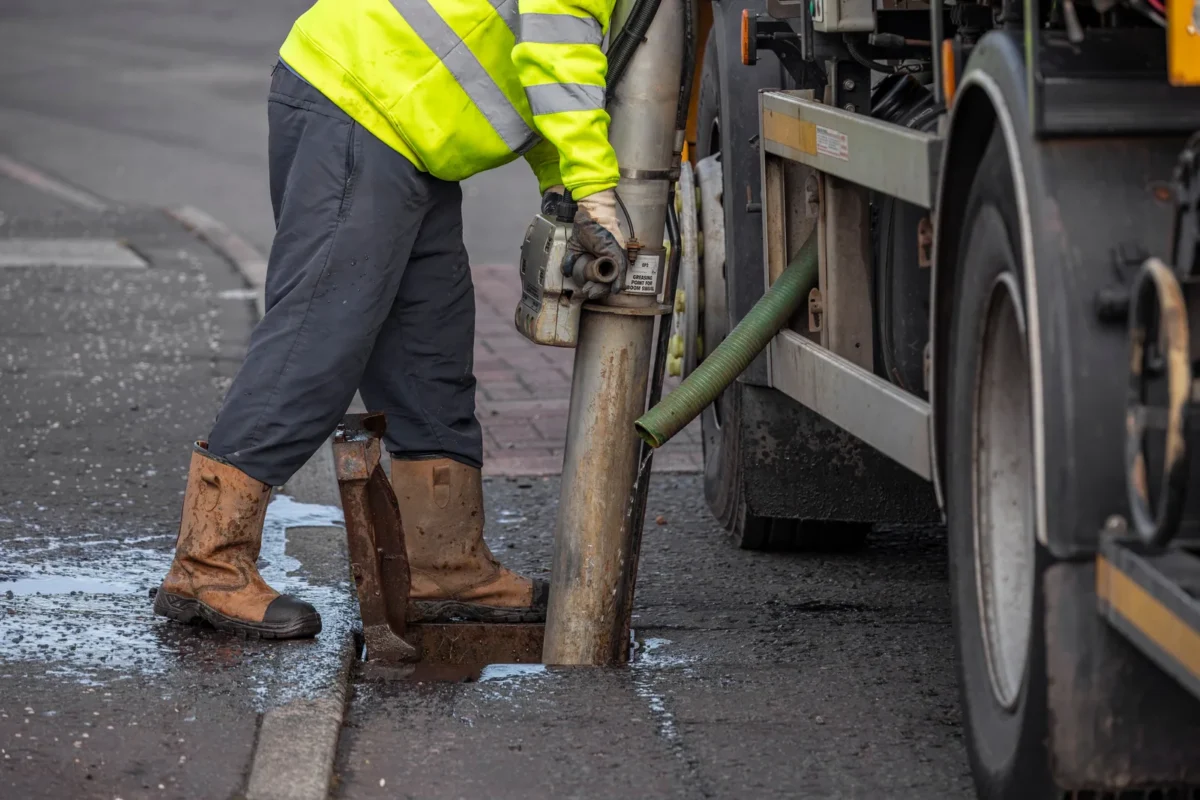
Before suction starts, we consider the contents, tanker position and hose route so the separator can be emptied without creating avoidable risks around traffic or open access points.
Cleaning separator compartments and components
Oil separators, grease traps and silt chambers serve different purposes. We establish the unit type before work, including any coalescing element, alarm probe or closure device. Oil and sludge can occupy different layers, so removing only the liquid does not complete the clean. Components are handled according to the manufacturer guidance rather than washed indiscriminately.

Discuss interceptor cleaning
Complete the form and we will get back to you.
Safe emptying and waste recovery
Before suction starts, we consider the contents, tanker position and hose route so the separator can be emptied without creating avoidable risks around traffic or open access points. Entry is avoided where the work can be done from outside; if entry is necessary, it needs separate confined-space assessment, controls and emergency arrangements. Emptying and component servicing remain distinct tasks.
Refilling and service checks
After cleaning, we inspect the accessible compartments and identify any deposit or component issue that remains. An oil separator is refilled with clean water in line with the manufacturer procedure before it is returned to use. Cleaning does not establish that the separator is correctly sized for the catchment or suitable for every liquid reaching it.
A recent spill can change both the waste that has to be removed and the checks needed before the separator returns to routine service. We distinguish normal accumulation from an incident load and make any outstanding servicing clear.
Interceptor Cleaning: common questions
How can a recent spill affect interceptor cleaning?
A recent spill can change the waste assessment and the checks needed before the separator returns to routine service.
Can recovered separator water be used for refilling?
Refilling follows the manufacturer procedure using clean water, rather than recovered separator liquid.
Does emptying replace servicing?
No. Alarms, closure devices and other components can need separate servicing.
Do oil and sludge need different attention?
They can form separate layers, so cleaning needs to address the retained contents throughout the unit.
Does cleaning prove the separator is correctly sized?
No. Suitability for the drainage catchment needs its own assessment.