Hospital Drainage Cleaning and Investigation

Hospital drainage cleaning and investigation need to account for a network used by several departments and support services. The first reported outlet may be some distance from the underlying restriction. Drainage drawings, asset references and the pattern of complaints help facilities teams define the route to investigate and the areas affected by the work.

HomeHospital Drainage Cleaning and Investigation

Hospital Drainage Cleaning and Investigation enquiry

Trace the route beyond the first complaint

Ward washrooms, kitchens, laundries and external drainage may connect in different ways across an estate. A symptom in one room can arise in a shared downstream section. Comparing reports with stack and chamber references helps avoid repeated local treatment of a wider restriction.

Older buildings and later extensions can make drawings difficult to interpret. Where connections are uncertain, targeted investigation can establish which areas share the affected route. The result should distinguish a verified connection from an assumption based on the plan.
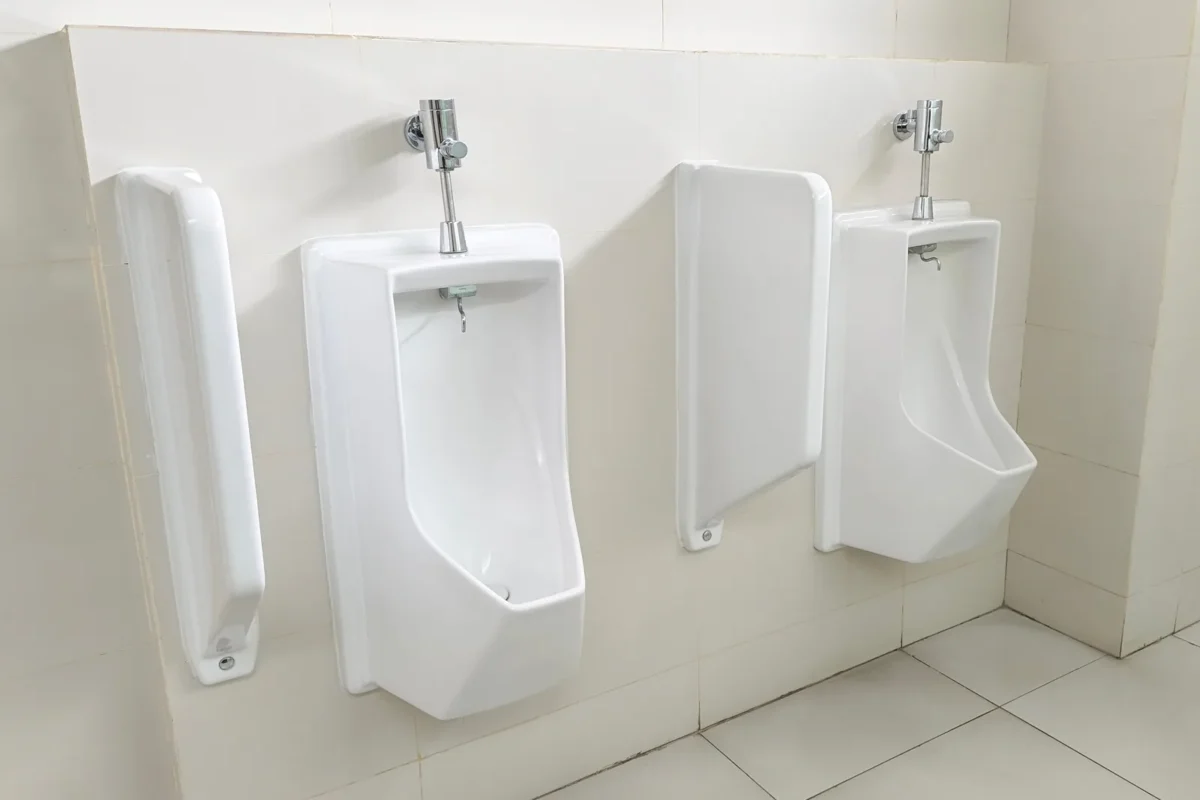
White wall-mounted urinals and flush fittings in a commercial washroom.

Drainage routes and infection-control boundaries

Ward washrooms, catering areas and surface-water systems carry different contents.

Working around occupied clinical areas

Access and temporary restrictions are arranged through the hospital's operating and infection-control procedures.

Define the work with the responsible site team

Access, temporary restrictions and movement of equipment need to fit the hospital’s operating arrangements. A service yard, corridor or chamber location can be essential for other activities even when the immediate work area appears quiet.

The planned work should identify the facilities connected to the affected pipe and the expected working area. The hospital’s responsible teams determine the operating and infection-control arrangements that apply. Drainage clearance alone does not decide when a clinical area is ready to return to use.

Identify the material and the cleaning boundary

Ordinary foul drainage, kitchen deposits and specialist waste streams should not be treated as interchangeable. The drainage route and the activities connected to it help establish what may be encountered. Any separate specialist waste arrangement needs to remain identifiable in the specification.

The HSE health and social care guidance includes healthcare waste and workplace health topics. The drainage task still needs its own defined cleaning extent, equipment access and arrangements for recovered material. The wider hospital setting does not remove those task-specific questions.

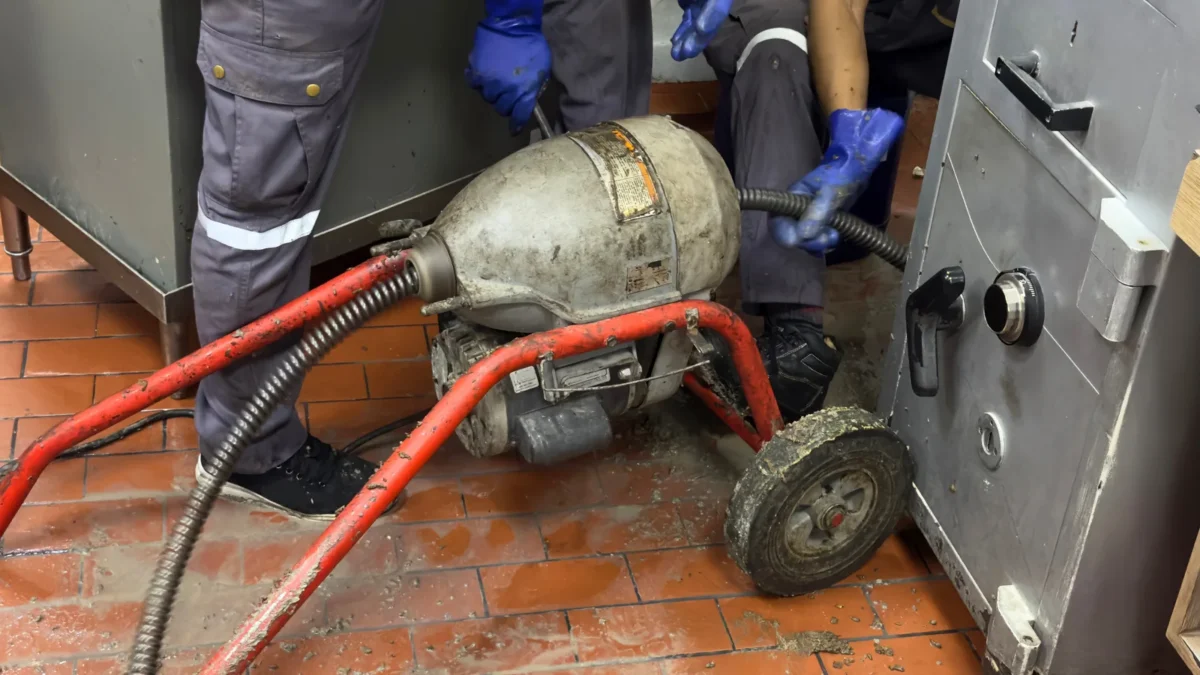
Workers operating a powered drum drain-cleaning machine on a commercial kitchen floor.

Discuss hospital drainage services

Complete the form and we will get back to you.

Choose investigation from what is found

A clean may restore flow while leaving uncertainty about a low section, damaged joint or inaccessible branch. Where recurring symptoms justify a camera survey, cleaning and inspection should be defined as separate stages so the survey’s coverage can be understood.

Water, deposits or an obstruction can prevent the camera seeing part of a pipe. Those lengths should remain identifiable as uninspected. A report that distinguishes observed defects from access limits is more useful for maintenance planning than a general statement that the system was checked.

Maintain a consistent asset record

An agreed set of stack, chamber and pipe references allows findings to be compared across departments and successive visits. Collection dates, cleaned lengths and any retained material can be recorded against the same assets.

This supports decisions about planned maintenance and targeted repairs. It also helps distinguish a new fault from a recurring condition on an existing route. Pump servicing, electrical work and structural repairs remain separate tasks where the findings indicate they are needed.

Hospital Drainage Cleaning and Investigation: common questions

Can several departments be affected by one restriction?

Yes. Shared downstream pipework can produce complaints in different rooms or buildings.

Does hospital drainage cleaning include clinical waste collection?

Specialist waste requires its own assessment and agreed arrangements. It should not be assumed to be part of ordinary drainage cleaning.

What should an inspection record make clear?

The assets inspected, the lengths reached, what was observed and any limits caused by access, deposits or water should be distinguishable.

Industrial Drain Cleaning

Services

Request a quote

Menu

Get a quote