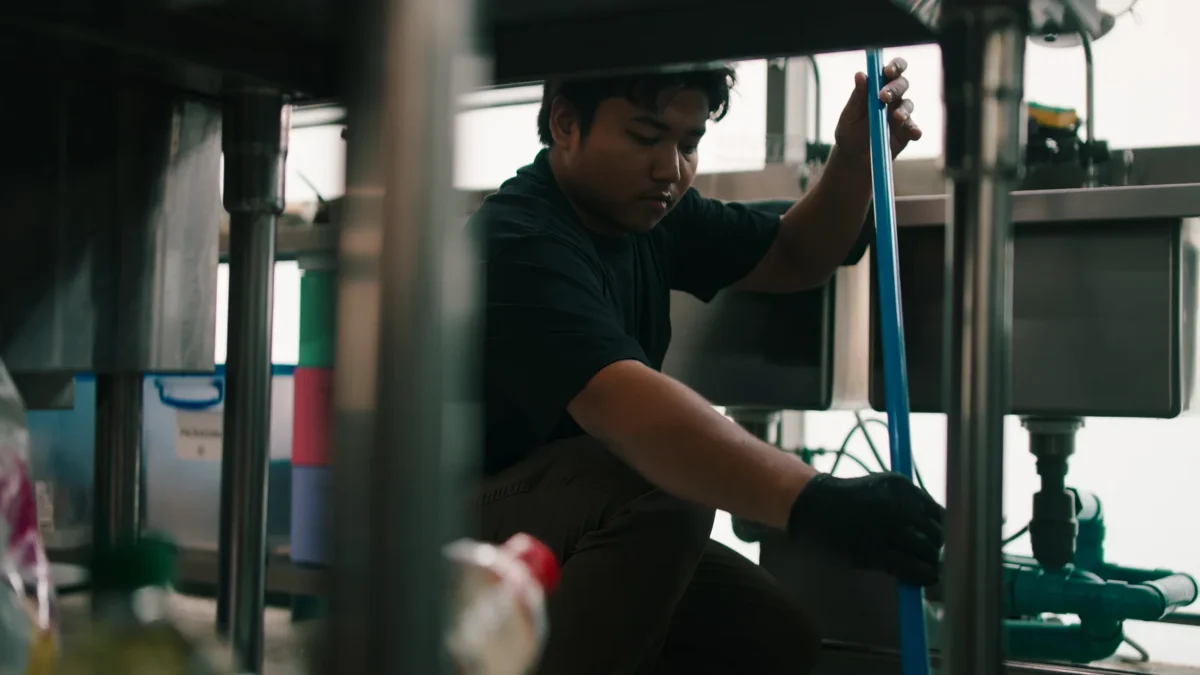
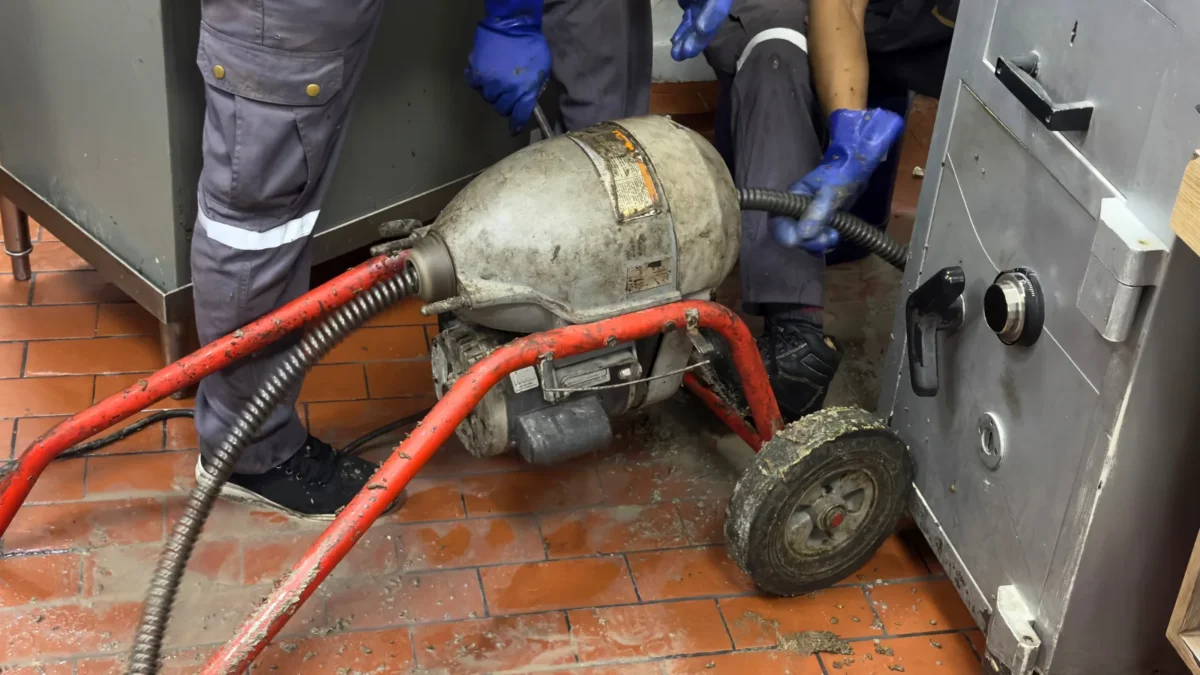
Kitchen, laundry and guest-room drainage
Catering drainage can carry grease and food residues, while laundry and bathroom connections have different patterns of use. These streams may join further downstream but still need separate attention when defining the cleaning scope.
A kitchen grease-management asset is not automatically included in a clean of the pipe serving guest bathrooms. Equally, emptying that asset does not establish that the connected drainage is clear. Each task should identify the equipment or pipe length it covers and the result to be checked.
Phase work around occupancy and service
Access through guest areas, kitchens, delivery routes and plant spaces can determine the order of work. The usable route for hoses and recovered material needs to be considered alongside noise and any temporary restriction on connected bathrooms.
A hotel may be busy at different times from its restaurant, conference rooms or leisure facilities. Phasing can be useful where the drainage connections allow it. A proposed phase must still account for discharge arriving from parts of the building that remain in use.
The practical plan should show the work location and access responsibility for each stage. This makes it easier to coordinate housekeeping, maintenance and food-service operations without assuming that an unoccupied room means an unused drainage route.