Yes. A commercial drain can carry water freely while taking it to the wrong drainage system. Clearance concerns whether material can pass through the pipe. A connection investigation concerns where that material goes. Successful cleaning cannot, on its own, answer the second question.
Identify the discharge that needs tracing
Define the activity or outlet causing concern. It might be a washdown point added during a refurbishment, a process area with uncertain connections or a sink whose route is absent from the site plan. Give each relevant outlet a location that the investigator can identify.
Keep known information separate from assumptions. A drawing may show the intended arrangement, while later alterations have changed the installed route. Equally, a nearby chamber does not prove a connection simply because it is conveniently positioned.
The Environment Agency’s business drainage guidance asks for plans showing drain types, flow direction and destinations. It also distinguishes foul and combined systems from surface-water routes and identifies misconnections as a problem requiring correction.
Set a different scope from blockage clearance
If there is no restriction, another cleaning visit may not resolve the uncertainty. Ask whether the proposed investigation will establish the route from the named outlet to a verified destination, or only inspect a limited length of pipe.
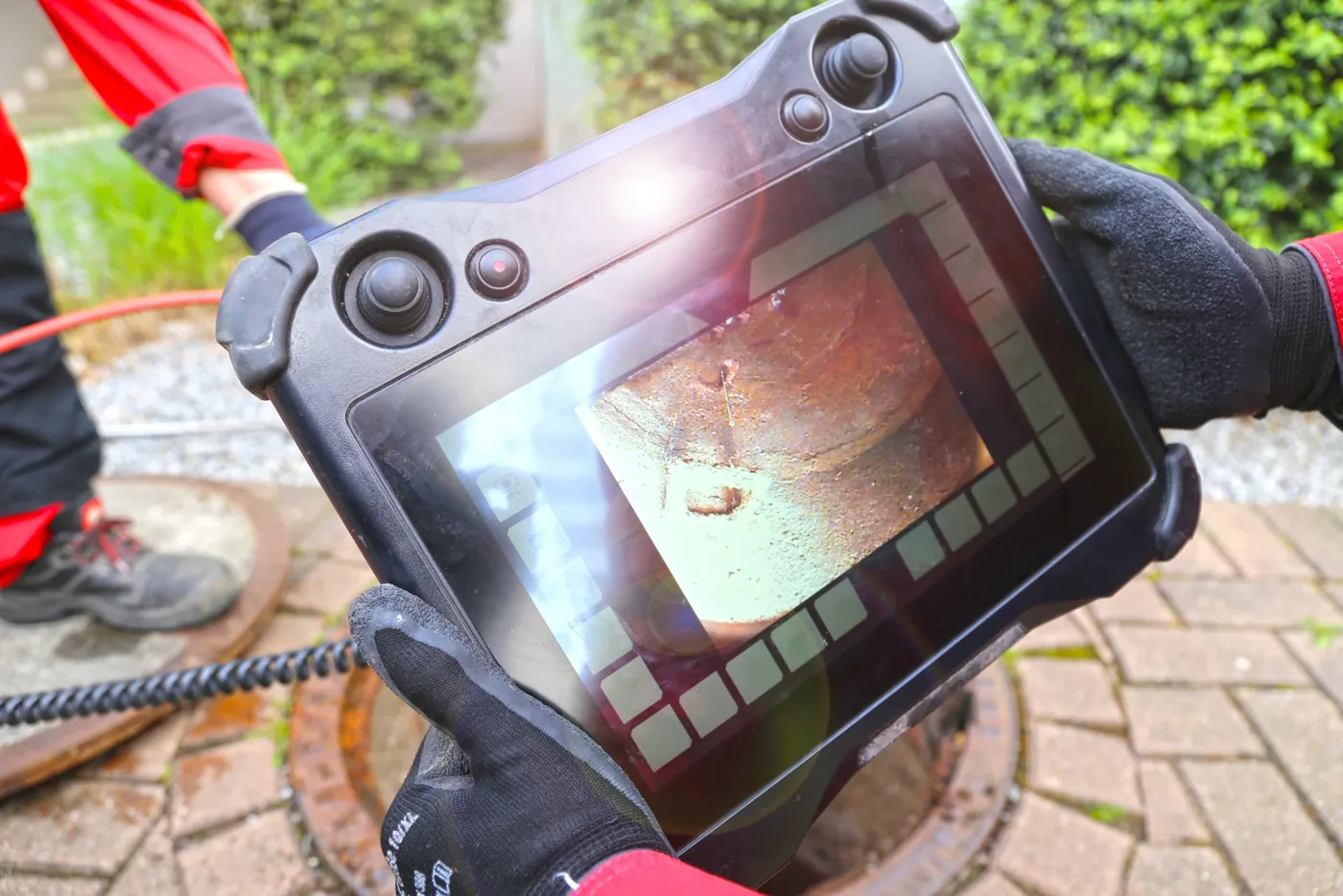
A camera recording of a clear pipe can be useful evidence, but its purpose and coverage need to be stated. If the recording ends at an unidentified junction, the downstream destination remains unanswered. The report should not convert that gap into a positive conclusion.
Our drainage compliance audits can be scoped around the existing evidence and the connection question. Provide drawings, previous reports and details of relevant building alterations so the review concentrates on the uncertain route.
Match the route to the actual use
The investigation needs to identify both the connected drainage and what the outlet receives. A pipe label alone does not establish whether the current business activity is appropriate for that route or covered by any required discharge agreement.
Describe ordinary operation and occasional uses, such as equipment washing or maintenance drainage. An outlet that usually receives one stream may also be used differently during a shutdown. Include those known activities so the assessment reflects the site as operated.
If a connection is confirmed as wrong, ask for the location and evidence supporting that finding. The subsequent correction can then be designed around a known defect rather than a general assumption that all drains in the area are unsuitable.
Keep an evidence-based plan after the work
- Mark the outlets and sections actually investigated.
- Identify the destination supported by the findings.
- Record remaining unknown connections or inaccessible lengths.
- Update the plan after any confirmed alteration.
Retain the report with photographs, survey references and relevant discharge documentation. A plan should distinguish an observed connection from an unverified historic line, particularly where future contractors will use it to scope work.
A useful conclusion may confirm the route, identify a misconnection or specify further tracing needed. Each is more informative than “drains clear”. Keeping those outcomes distinct helps a facilities manager commission the right next task and maintain a drainage record that supports later decisions.