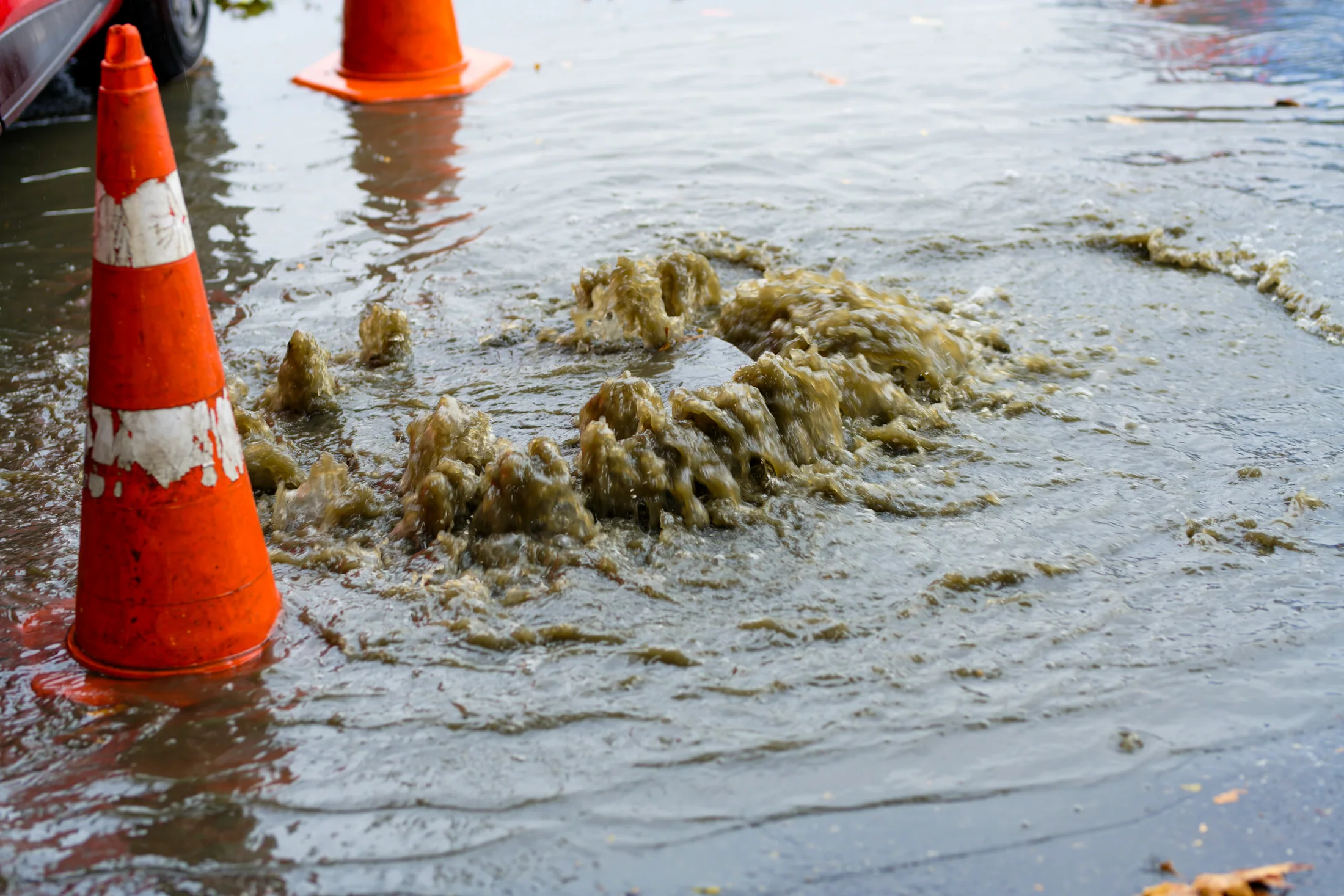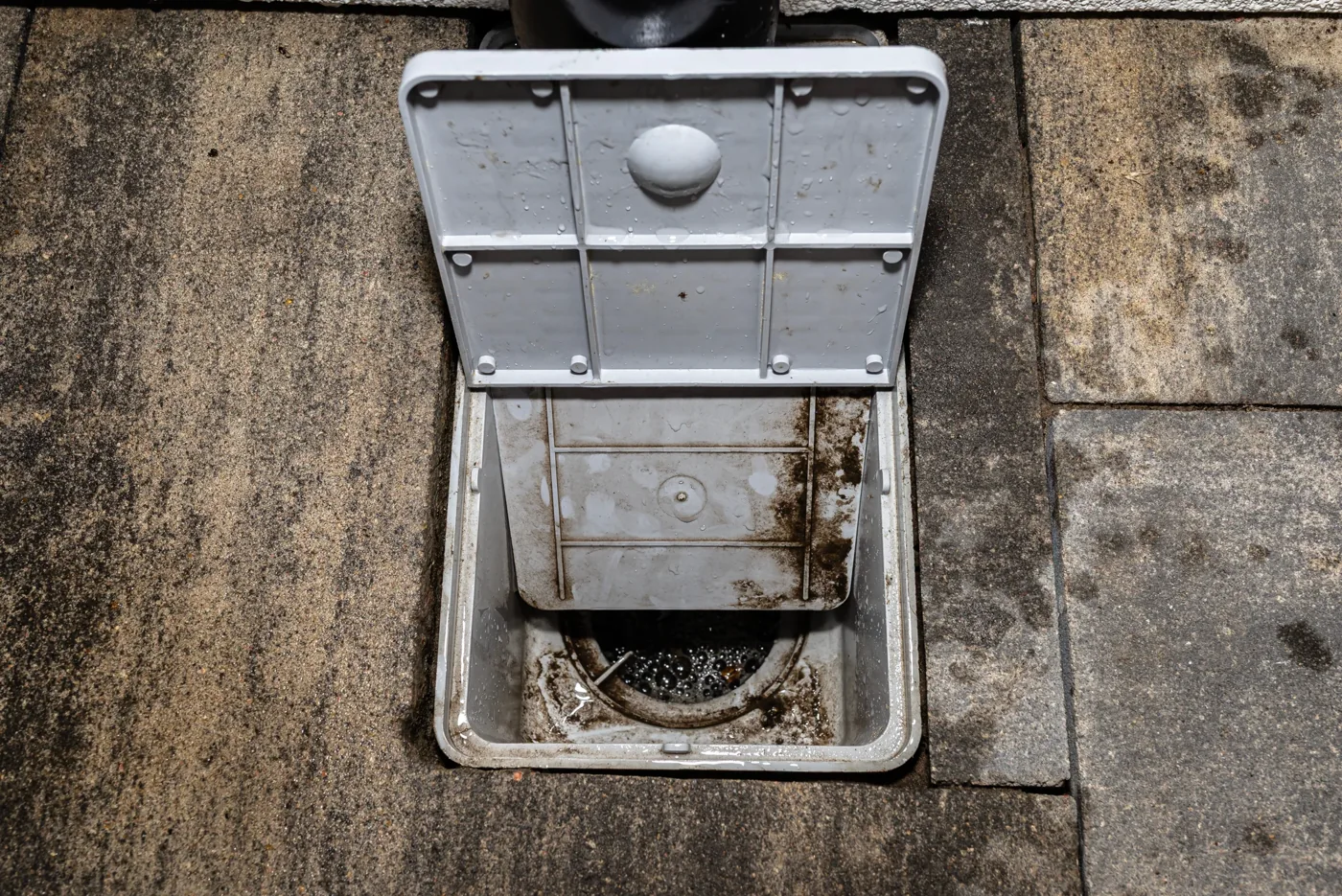
A clear gully grating does not establish that water can pass through the connecting pipe and leave the site. Yard flooding can involve material inside the gully, an outlet restriction, conditions farther downstream or more incoming water than the drainage system can accommodate at that time.
Follow the route beyond the visible opening
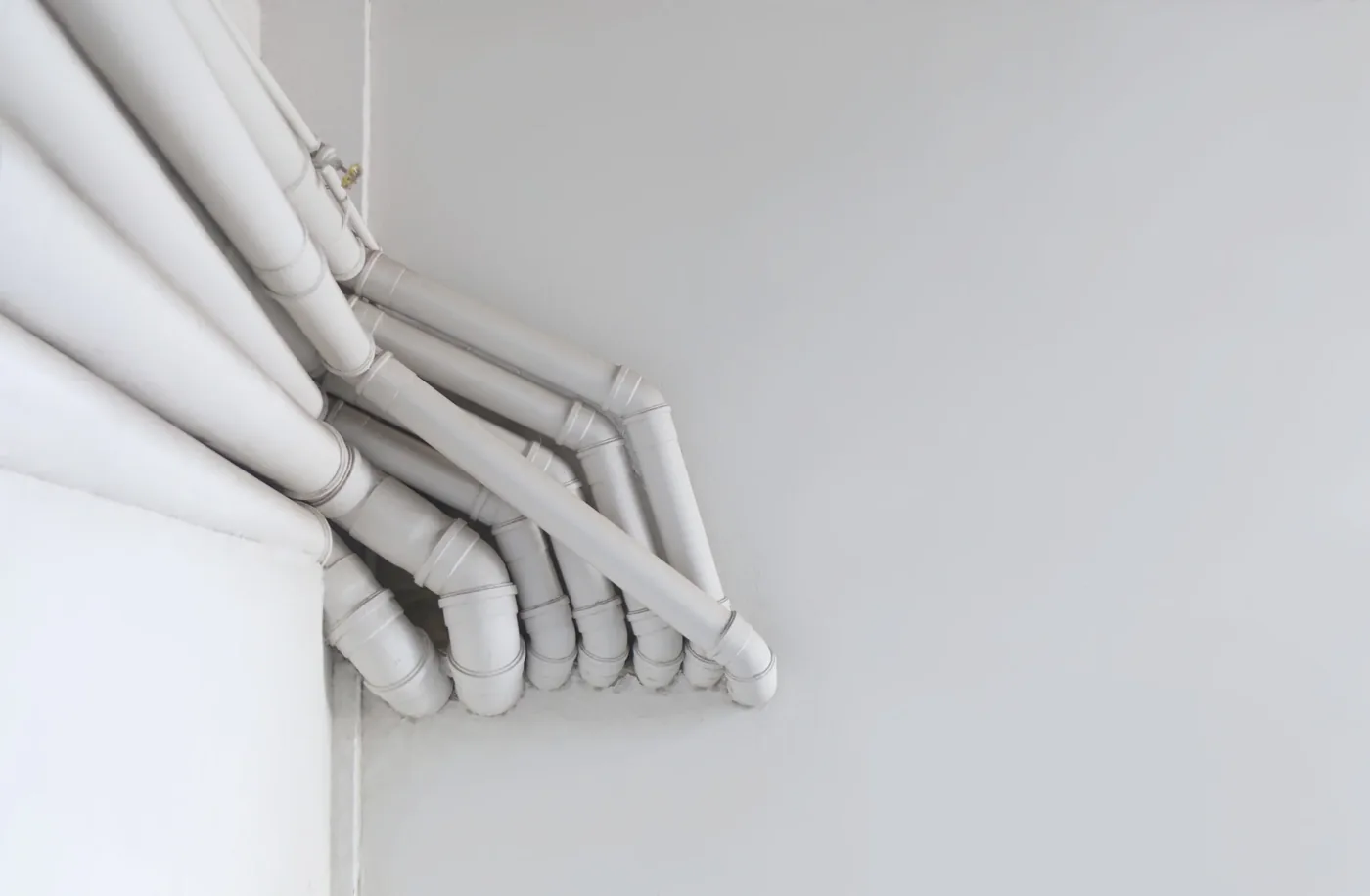
The grating is the surface entry point. Below it, the gully and its outlet connect to a drainage route that may include pipes, storage, flow controls or an outfall. A blockage or restriction elsewhere can affect a collection point that looks clear from above.
Use the site drainage plan to identify that route. If there is no reliable plan, tell the contractor rather than assuming that the nearest chamber is connected. Several separate systems may cross the same industrial yard.
Our gully cleaning service addresses retained material and accessible components. Where flooding remains after cleaning, the next scope should identify which outlet or connected section needs investigation.
Record how the flooding develops
The order of events is useful. Note where water first gathers, whether it reaches the gully or pools elsewhere, and whether it recedes when rainfall eases. Photographs from a safe, accessible position can show the affected area without requiring anyone to inspect an open chamber.
If one corner floods while neighbouring gullies continue taking water, provide those locations. If several gullies become affected together, record that pattern too. These observations help define the investigation, but they do not prove the cause without checking the connected system.
Include changes to the yard since the last satisfactory period: resurfacing, new storage areas, building work or altered roof drainage. The question is whether water reaches the same inlets and follows the same route as before.
Separate maintenance from capacity questions
Removing accumulated material can restore space within a gully and clear an accessible obstruction. It does not enlarge the downstream pipe or create additional storage. If the drainage route is clear, a remaining capacity or level question may need an engineer’s assessment.
England’s national SuDS standards consider drainage design, maintenance and operation together. They are non-statutory standards for new development and relevant retrofit work, not evidence that every existing yard must be rebuilt to a particular design.
For an existing site, ask what evidence supports the proposed explanation. A statement that the pipe is too small should be distinguished from a confirmed obstruction, an inaccessible section or an unverified assumption about the outfall.
Agree the evidence needed after cleaning
- Identify each gully attended and the material removed.
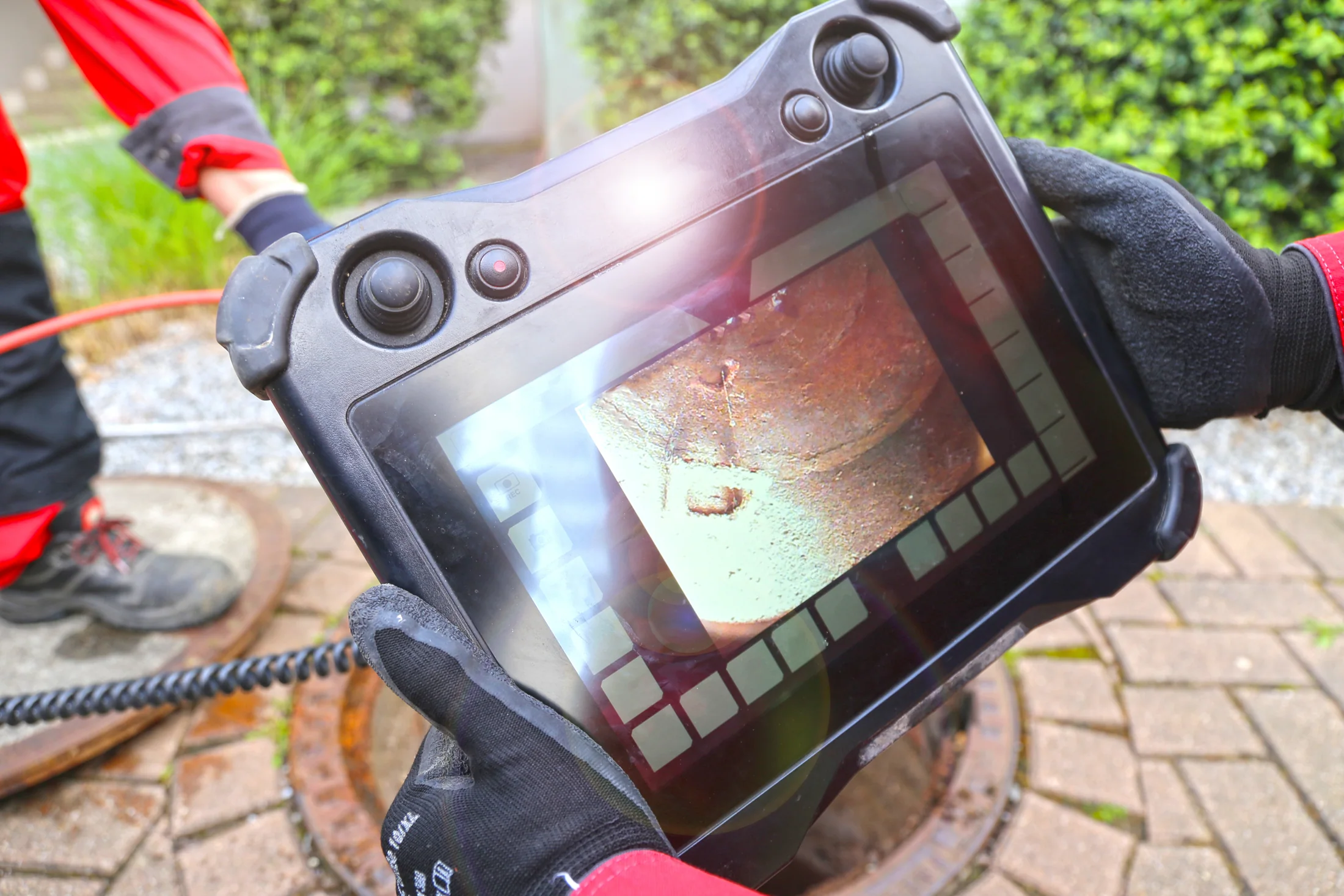
- Record whether the outlet and connected route were checked.
- State the conditions under which drainage was observed.
- List any remaining restriction or unanswered capacity question.
A dry-weather flow observation may be useful, but it is not equivalent to observing the system during the rainfall that causes the problem. Keep that limitation clear when comparing the completion record with later flooding.
The next step should follow the findings: targeted outlet work, investigation of a defined pipe section, or assessment of the wider drainage arrangement. That is more informative than ordering another complete yard clean simply because the visible grates already appear clear.