The first commercial drainage investigation should match the fault being reported. A slow kitchen drain may need targeted blockage assessment, while several overflowing outlets may indicate a restriction farther downstream. A pump alarm needs different checks from standing water in a yard. Ordering jetting, a CCTV survey or tanker recovery without distinguishing these conditions can leave the original question unanswered.
For facilities managers, the useful starting point is to establish which assets are affected, how the problem develops and what the first attendance must prove. This makes it easier to compare proposed work and avoid paying for repeated interventions that address only the visible symptom.
Start with the pattern, not the equipment
The location where water appears is not necessarily where drainage performance has failed. Several fixtures can feed one branch, several branches can share a downstream pipe, and surface-water drainage may have a separate discharge route from foul drainage.
Before requesting a contractor, establish whether the problem affects one appliance, one building area or several connected assets. Note whether the fault occurs continuously, during peak business activity, after rainfall or alongside an equipment alarm.
Three contrasting patterns help define the first question:
- One slow outlet: Is the restriction confined to the appliance connection or a short branch?
- Several affected outlets: Is there a shared downstream restriction or another common drainage problem?
- Standing water without a visible obstruction: Is the issue connected to pumping, discharge levels, storage or system capacity?
These are investigation starting points, not diagnoses. An unusual connection layout can produce misleading symptoms, particularly in premises that have undergone refurbishment or subdivision.
When should cleaning be the first task?
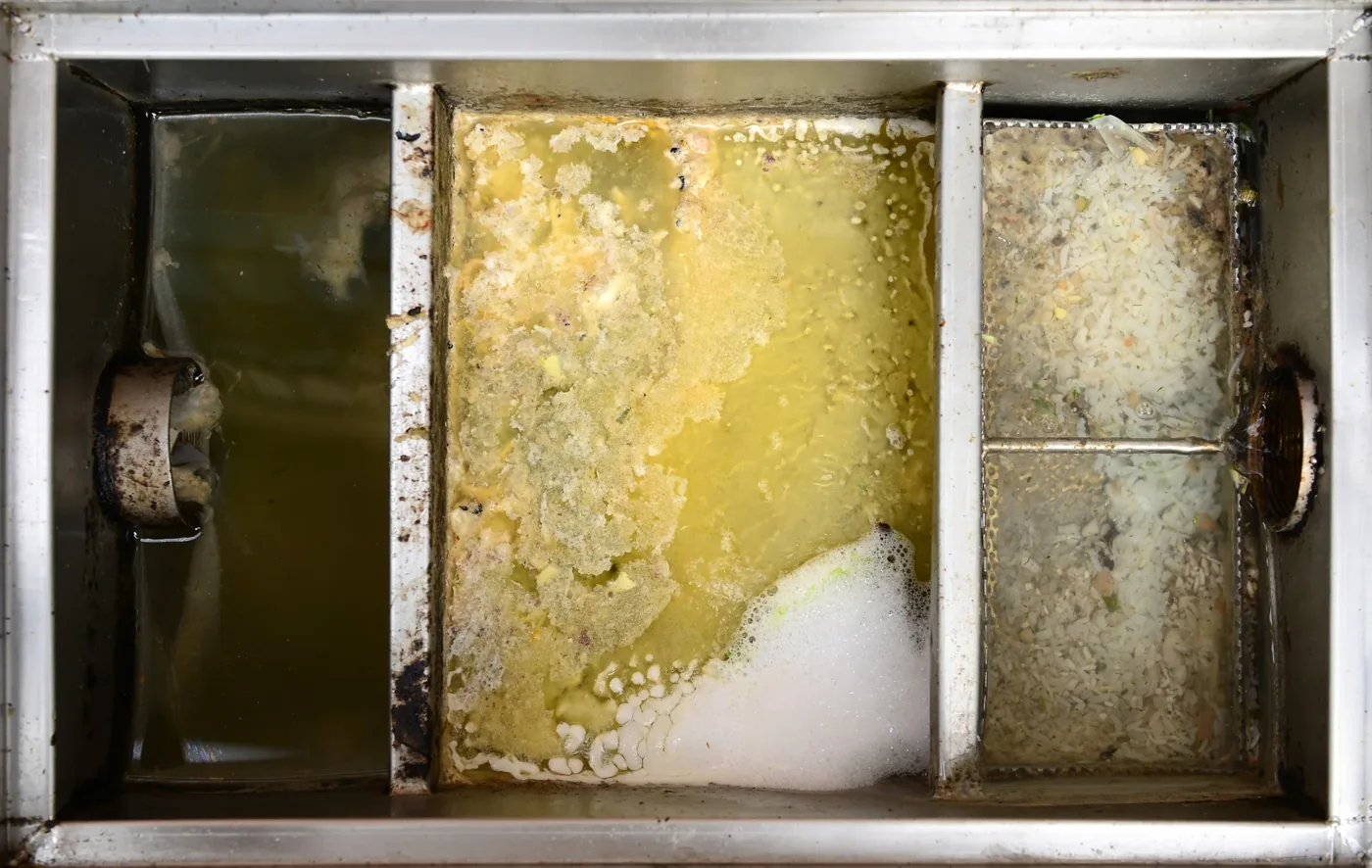
Cleaning is a reasonable initial option where there is evidence of a removable restriction and the affected pipe can be identified. Grease, settled sediment, fibrous material and loose debris behave differently, so the proposed cleaning method should reflect what is known about the deposit.
Ask whether the contractor intends to clear a local obstruction, clean a defined pipe length or recover material from a chamber. These scopes are not interchangeable. Moving sediment farther into the network might restore a nearby outlet while leaving material to settle elsewhere.
For an identified pipe restriction, commercial drain cleaning may remove the obstruction and restore flow. The affected pipe run and any evidence of deterioration should be assessed before selecting the cleaning method, rather than assuming every blockage needs the same jetting approach.
Cleaning also has a defined evidential limit. Restored flow demonstrates an improvement at the point checked, not necessarily that the full pipe is structurally sound or every connected branch is unrestricted.
When is a CCTV survey the better starting point?
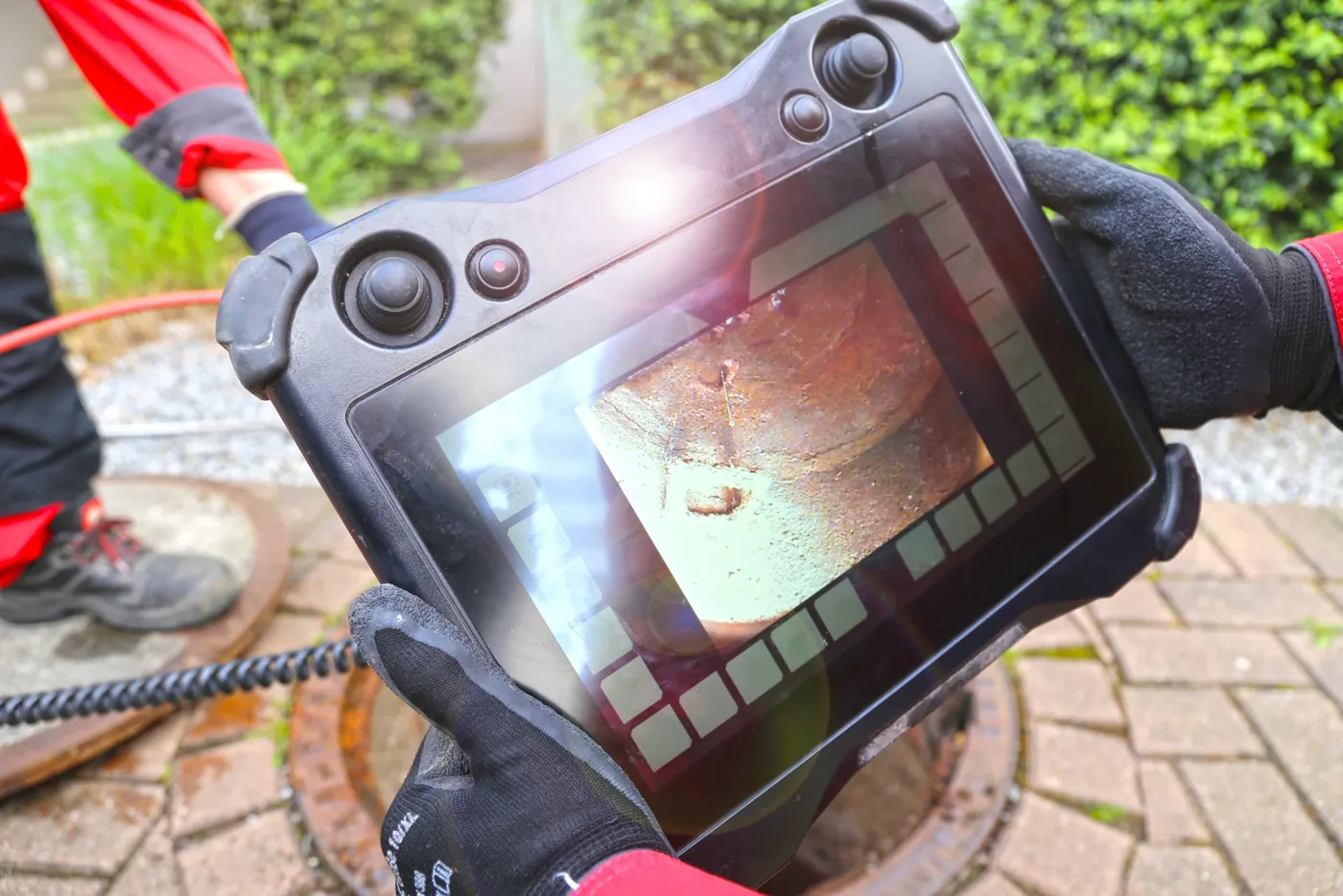
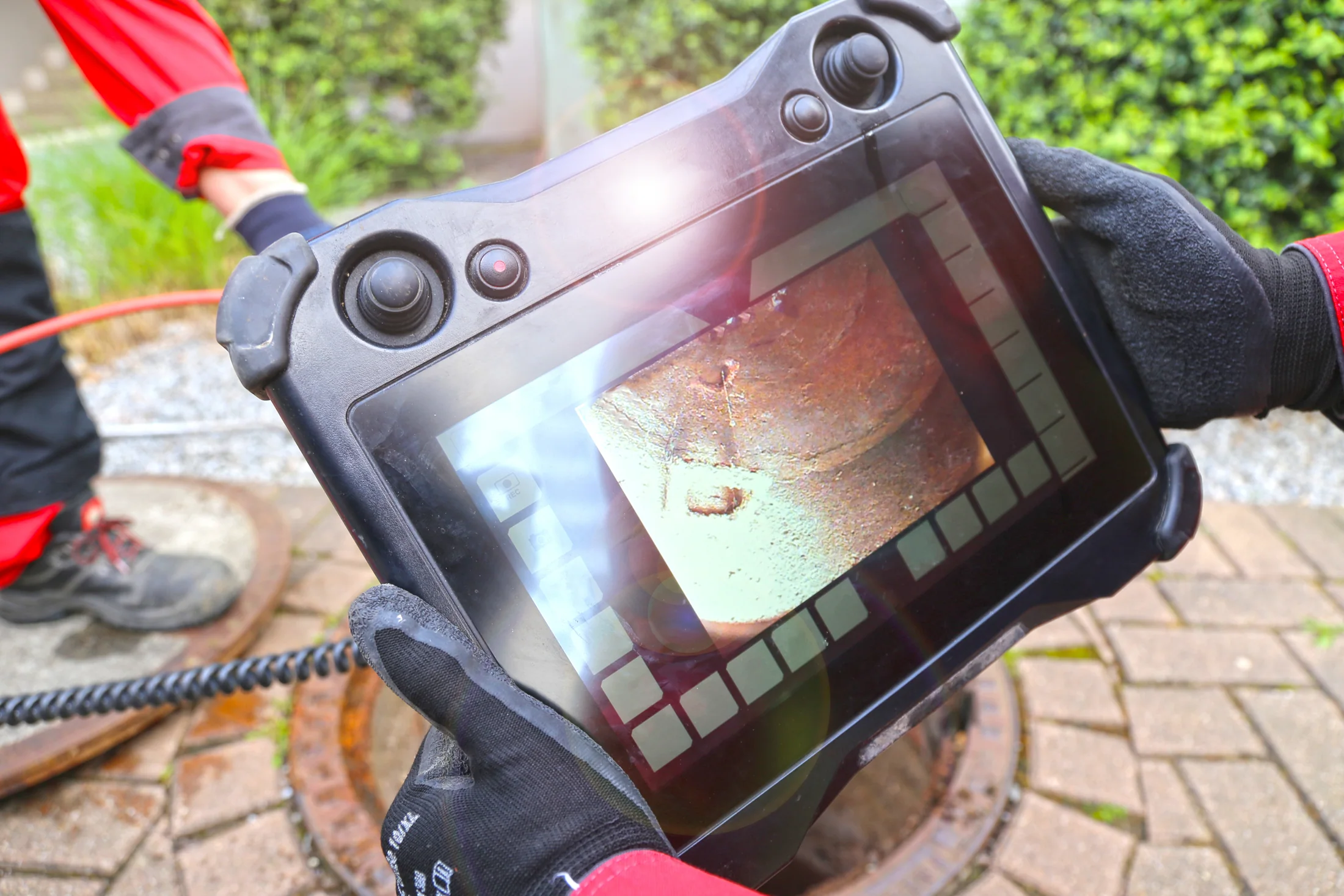
A camera investigation becomes more valuable when the central question concerns an uncertain route, repeated failure at the same location or a suspected physical defect. It can record accessible internal surfaces, connections and visible obstructions, provided the equipment can reach them and visibility is adequate.
For example, a drain that blocks repeatedly shortly after cleaning may contain an unresolved defect or receive material from an unexamined branch. Instead of another general clearance visit, the buyer can request inspection of the specific recurring location.
A commercial CCTV drain survey should therefore have an inspection objective. Ask which access points and pipe lengths are included, whether preparatory cleaning is needed and how uninspected sections will be recorded.
Standing water and deposits can conceal pipe surfaces. A camera travelling the full available distance does not establish that all surfaces were visible. If the survey cannot resolve the question, the report should describe what prevented it.
How do pumping and downstream restrictions change the decision?
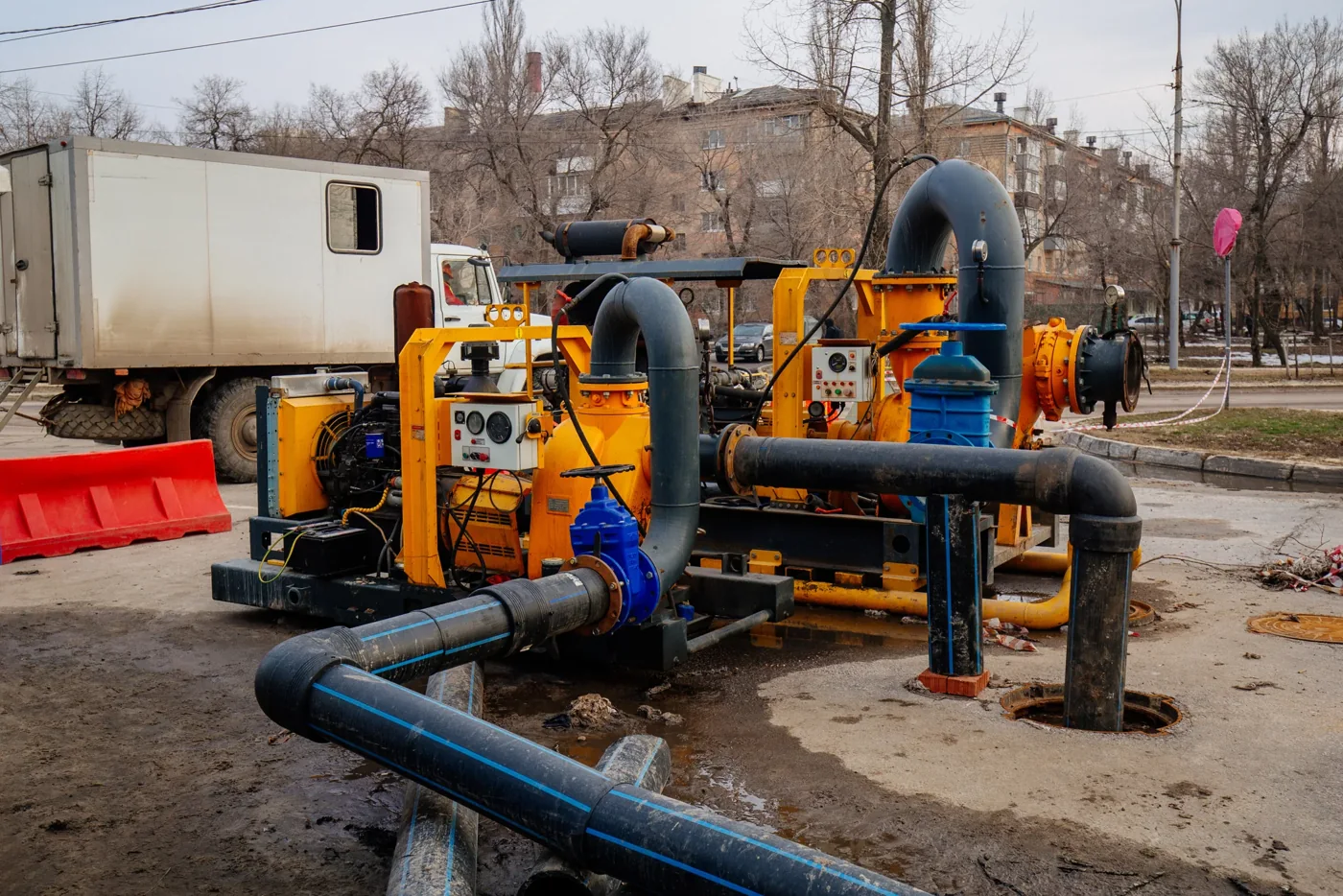
Where drainage relies on a pumping station, rising water levels do not automatically prove a blocked pipe. The fault might concern pump operation, level detection, controls or an incoming flow that exceeds the available discharge.
A cleaning contractor may be able to identify accumulated material, but an electrical or control defect requires a different assessment. The first scope should distinguish investigation of the wet well from diagnosis of the pumping equipment.
Likewise, a downstream sewer restriction can affect several outlets upstream. The shared route matters more than the position of the first overflow. Where a public sewer may be involved, responsibility should be checked rather than inferred from the property boundary.
Ofwat’s explanation of public and private sewers identifies the division of responsibility between sewerage companies and property owners in England and Wales. Sewer records and the actual network arrangement are important when deciding who should investigate.
Why drainage plans matter before work is commissioned
Commercial premises may contain foul, surface-water and combined drainage, sometimes alongside private treatment or pumping assets. The route and destination matter because cleaning a pipe does not establish whether its discharge arrangement is appropriate.
The Environment Agency’s pollution prevention guidance for businesses recommends maintaining drainage plans that identify drain types, directions of flow and destinations. For an existing site, this information helps a buyer distinguish connected assets and identify where evidence is missing.
If the plan is unreliable, the first investigation may need to establish connections before selecting a wider cleaning programme. Historical drawings should not be treated as proof that later building work followed the same route.
What should the first quotation and report contain?
Different contractors may quote different amounts because they are answering different questions. A quotation for a single blockage clearance cannot be compared directly with one including preparatory cleaning, several survey runs and recovered-waste handling.
For a useful comparison, request:
- The investigation objective: Which reported fault is the attendance intended to explain?
- The asset boundary: Which chambers, pipe lengths, pumps or outlets are included?
- The proposed method: What supports the choice of cleaning, recovery, inspection or engineering diagnosis?
- The deliverables: Will the record identify findings, treated sections, recovered material, photographs and limitations?
- The next decision: What happens if the fault remains, a defect is discovered or the original scope cannot be completed?
The completion record should distinguish confirmed observations from suspected causes. A cleared branch, a surveyed pipe and a verified system repair are three different outcomes.
Choosing a proportionate first attendance
The most effective starting point is the smallest clearly defined investigation capable of answering the important question, while accounting for the connected drainage network. Sometimes that means clearing a known obstruction. Elsewhere it means establishing the route, inspecting a recurring defect or assessing a pump fault before further cleaning.
For a site with several symptoms or uncertain connections, describe the affected assets and previous findings when requesting commercial drainage services for fault investigation and cleaning. The proposed work can then be judged by the evidence it is intended to produce, not simply by the equipment offered.