

Fat oil and grease management reduces the material entering kitchen drainage and removes deposits already held in traps or pipework. We clean the affected equipment and advise on maintenance based on its actual use. Pouring hot water after waste fat does not make that fat disappear from the drainage system.
Fat Oil and Grease Management
Fat oil and grease management for commercial kitchens, combining trap and drain cleaning with advice on source control and maintenance.
HomeFat Oil and Grease ManagementFat Oil and Grease Management enquiry
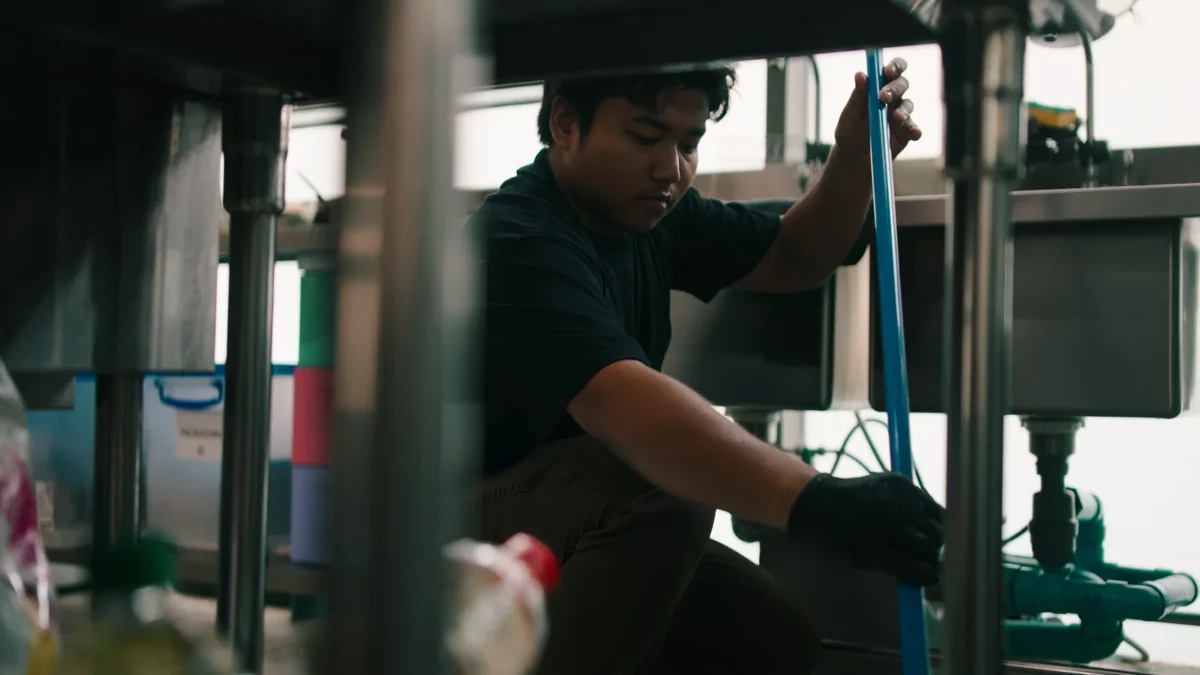
Grease capture and retained solids
A grease unit can hold floating fat and settled food solids at the same time.
Cleaning grease systems safely
We assess the grease unit and the connected drainage before deciding how much cleaning is needed.
Grease capture and retained solids
A grease unit can hold floating fat and settled food solids at the same time. Both reduce the working space available when allowed to accumulate. Hot water may carry fat away from the sink before cooling further along the pipe, where deposits can form again. Source control therefore remains necessary alongside trap cleaning.
Discuss fat oil and grease management
Complete the form and we will get back to you.
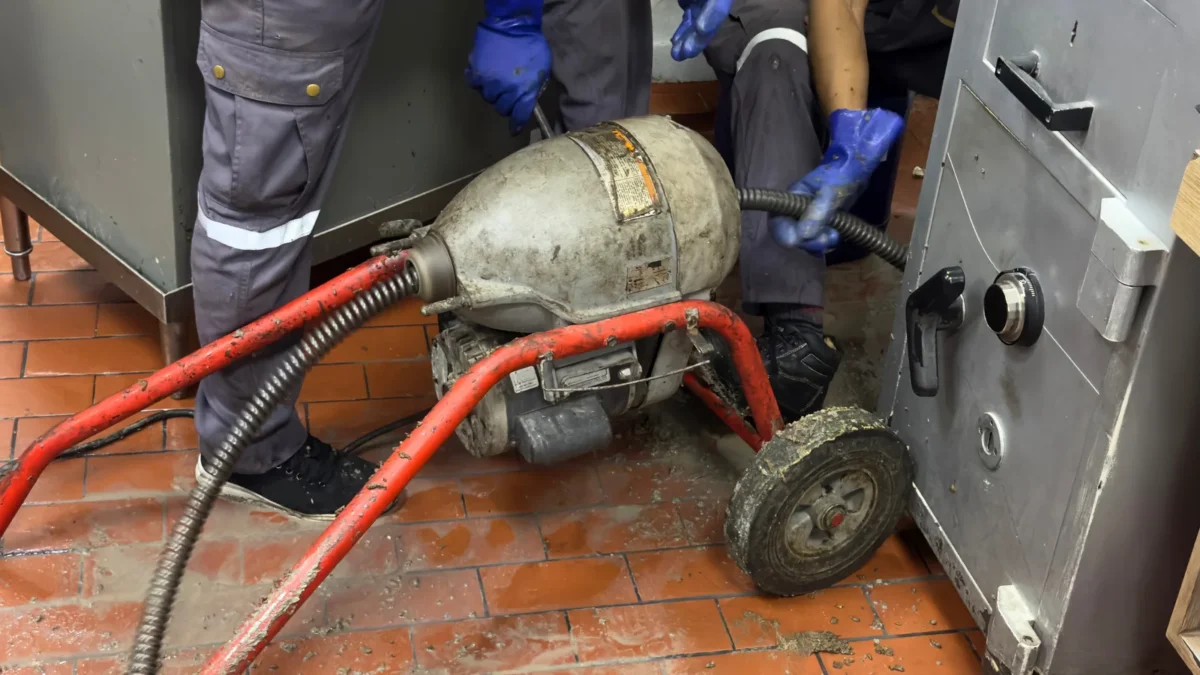
Cleaning grease systems safely
We assess the grease unit and the connected drainage before deciding how much cleaning is needed. Food areas are protected from recovered waste and spray, and kitchen drainage is restricted where required during the work. Collected grease and solids are removed through an appropriate waste route, with removable components reinstated according to the unit design.
Reviewing loading and maintenance
The amount of grease and solids found is considered against the existing maintenance interval. A busier kitchen or new equipment can increase loading. Cleaning removes deposits, but persistent downstream grease may point to bypassing, poor installation or inadequate capacity that needs separate attention.
Source control remains important even when grease equipment is installed. Dry scraping plates and keeping bulk cooking oil out of sinks reduce the load entering the drainage and help the trap deal with the remaining wastewater as intended.
Fat Oil and Grease Management: common questions
Will boiling water prevent grease blockages?
No. Water cools along the drainage route and fat can accumulate downstream.
Does a grease trap remove the need for good disposal habits?
No. Good disposal habits remain necessary even with grease equipment in place.
Is one cleaning interval suitable for every kitchen?
No. The unit design and observed loading determine a suitable interval.
Does a grease trap collect food solids too?
Many units retain solids as well as fat, and both need attention during cleaning.
What if grease keeps appearing downstream after the trap is cleaned?
Persistent downstream grease may indicate bypassing, poor installation or inadequate capacity that needs separate attention.